Buzz, Ding, Repeat: How Your Phone Was Engineered to Own You
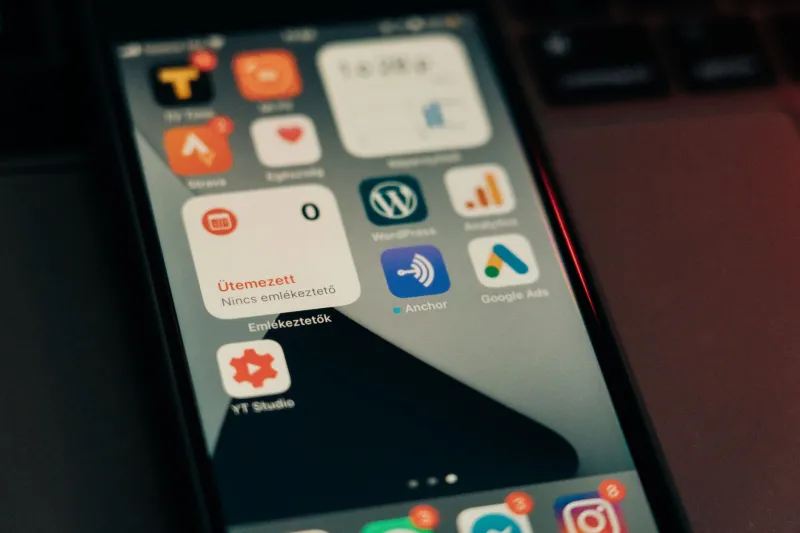
Somewhere in a conference room in Menlo Park, someone decided that a small red circle with a number in it would be the most effective psychological lever ever installed on a consumer device. They were right. The badge count — that innocent-looking digit sitting on your app icon — isn't a convenience feature. It's a debt notice. It says: you owe us attention, and the bill is growing.
This wasn't an accident. It was engineering.
The Architecture of Interruption
Push notifications as a system date back to BlackBerry's always-on email in the early 2000s, but the psychological weaponization of that infrastructure really kicked into gear around 2009, when Apple opened push notification services to third-party developers. Suddenly, every app had a direct line to your nervous system.
What followed was an arms race. Platforms began studying — obsessively — which notification formats triggered the fastest response. Timing mattered. Vibration patterns mattered. The specific wording of an alert mattered. Facebook famously A/B tested notification copy to find phrases that created the most anxiety-driven opens. Twitter experimented with batching notifications, then unbatching them, measuring engagement spikes each time.
The variable reward schedule — the same mechanism that makes slot machines addictive — got baked into the notification layer. Sometimes the buzz means something genuinely important. Usually it doesn't. But your brain can't tell the difference fast enough, so it treats every alert like a potential jackpot. You check. Every time. That's not weakness. That's your dopamine system doing exactly what it was trained to do.
The haptic feedback wasn't innocent either. Apple's Taptic Engine introduced nuanced vibration patterns specifically because physical sensation bypasses cognitive filtering more effectively than sound alone. A buzz you feel in your pocket triggers a stress response before your conscious brain has even registered that your phone moved.
People Who Burned It Down
Denise Okafor, a project manager in Atlanta, spent three years feeling like she was drowning. "I'd sit down to work and within twenty minutes I'd have checked my phone at least a dozen times," she says. "I wasn't getting notifications about anything urgent. I was getting likes on a photo I posted two days ago. But my body didn't know that."
She didn't go cold turkey. She went systematic. First, she turned off every notification except phone calls and calendar alerts. Then she deleted the apps that existed solely to generate notifications — Instagram went first, then LinkedIn. For her remaining apps, she disabled badge counts entirely. "That red number was the worst part for me," she says. "The absence of it felt weird for maybe a week. Then I stopped caring."
Her current setup: no social media apps on her phone, email checked manually three times a day through a browser, and her phone on silent with only her partner and her mother able to break through via a contact-specific ringtone. She uses a secondhand Garmin watch for time so she doesn't need to look at her phone to check it.
Marco Delgado, a freelance developer in Austin, took a different approach. He kept his apps but routed all notifications through a single aggregator — using iOS's Scheduled Summary feature to batch everything into two daily dumps, at noon and 7 PM. "I still get the information," he says. "I just get it on my schedule, not theirs."
The tools he swears by: Screen Time on iOS with strict app limits, Grayscale mode turned on full-time ("Color is part of what makes the icons feel urgent"), and a physical notepad next to his desk for capturing thoughts that would otherwise send him reaching for his phone.
Sarah Whitmore, a nurse in Columbus, Ohio, went furthest. She downgraded to a Light Phone II — a minimalist device that makes calls, sends texts, and does almost nothing else. "People act like that's extreme," she says. "But I work twelve-hour shifts where I'm responsible for actual human lives. The idea that I need to be reachable by an app at all times is insane."
She keeps a tablet at home for anything requiring a screen. Her notification count on that device: zero. Everything is pull, nothing is push.
What the Research Actually Says
Gloria Mark at UC Irvine has been studying digital interruption for over two decades. Her work consistently shows that after an interruption — including a notification you choose not to act on — it takes an average of 23 minutes to return to deep focus. Twenty-three minutes. For a buzz you didn't even open.
The notification industry has known this. They've also known that the interruption doesn't need to be responded to in order to degrade your concentration. The anticipation of a notification — knowing your phone might buzz — measurably reduces cognitive capacity even when the phone is silent and face-down. A 2017 study from UT Austin found that just having your phone visible on your desk impairs working memory and fluid intelligence. The device doesn't have to do anything. Its presence is enough.
This is what "engagement" actually means in the context of tech company metrics. It doesn't mean you found value. It means your attention was successfully captured and your behavior was modified. The engagement is theirs. The cost is yours.
The Honest Accounting
Here's the part nobody wants to say out loud: when you turn most of it off, you don't miss much.
Denise went back through six months of her old notification logs after she'd cleared the system. "Almost everything was promotional. Sales, app updates, 'people you may know,' stuff I never asked for. The things that were actually time-sensitive — a text from my sister, a calendar reminder — those I'd already configured to get through."
Marco found that his response time on emails didn't meaningfully change. "People think you need to be reachable instantly. But most things don't require an instant response. That expectation was manufactured."
What you might actually miss: real-time sports scores if that's your thing, the occasional breaking news alert, and the low-level social anxiety of not knowing what's happening on platforms designed to make you feel like you're missing out. That last one fades faster than you'd expect.
What you get back: the ability to finish a thought. The ability to sit with boredom for thirty seconds without reaching for a screen. The ability to be in a room with other people without half your brain somewhere else.
Lose the Grip
The notification system was never built for you. It was built to extract something from you — attention, data, behavioral patterns that get sold to advertisers or fed back into engagement algorithms. The red badge, the buzz, the carefully timed alert at the exact moment you're most likely to open the app — none of that is a service. It's a lever.
You're allowed to break it. You're allowed to decide which apps get a line to your nervous system and which ones don't. You're allowed to check things when you want to check them instead of when a product manager in California decided you should.
The phone will still work. The world will not end. And you might, for the first time in years, be able to read a full article without looking up once.
How'd that go, by the way?