The Closet Server Club: Americans Who Stopped Trusting the Cloud and Built Their Own
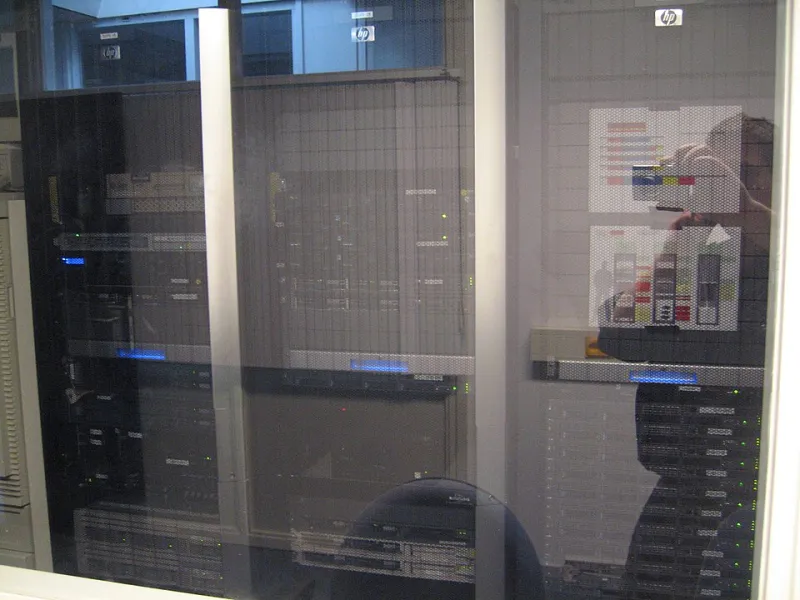
Photo: Jemimus, CC BY 2.0, via Wikimedia Commons
There's a server humming in a closet in suburban Columbus, Ohio. It's running 24 hours a day, handling backups, streaming video, and syncing files across four devices. It cost about $180 to build from spare parts and a refurbished hard drive. It belongs to a 41-year-old project manager named Ryan, and it has replaced Google Drive, Google Photos, and a Plex subscription.
"The cloud is just someone else's computer," Ryan says, echoing a phrase that's become something of a rallying call in self-hosting communities. "I got tired of paying rent on my own data."
Ryan is not alone. Across the US, a loose community of home server builders is quietly opting out of the cloud storage model — not because they're paranoid, but because they've done the math, read the terms, and decided the trade-off doesn't work in their favor.
Why People Are Actually Doing This
Let's be clear about the motivations, because they're more varied than you might expect.
Some people are here for the money. Google One's 2TB plan runs $9.99 a month — just over $120 a year. iCloud's 2TB tier is the same. Dropbox Plus is $11.99 a month. Stack a couple of these and you're paying $200 to $300 annually for the privilege of storing your own files on someone else's hardware.
A basic home server — an old desktop or a purpose-built NAS (network-attached storage) device — can hold several terabytes for a one-time cost. The ongoing expense is electricity, typically a few dollars a month. Within a year, most self-hosters have broken even. After that, they're ahead.
Other people are here because they got burned. Google Photos ended its unlimited free tier in 2021. Dropbox slashed features from free accounts. Amazon Photos changed terms quietly and without fanfare. Each of these moments pushed people toward the same question: what exactly am I building here if this company can change the deal whenever it wants?
And some people are here because they've thought carefully about what it means to hand a technology company continuous access to every photo, document, and file in their life.
What Self-Hosting Actually Looks Like
The entry point is more accessible than it sounds. The self-hosting community — centered around subreddits like r/selfhosted and forums like the Homelab community — has spent years making this approachable for non-experts.
The most common beginner setup involves a Raspberry Pi (a small single-board computer, typically $35 to $80) or a repurposed old laptop or desktop running open-source software. The go-to platform right now is Nextcloud, a free, open-source file sync and sharing application that mirrors much of what Google Drive or Dropbox does — cloud sync, photo backup, document editing, calendar, contacts — except the server is in your house.
"I set up Nextcloud on a Pi 4 in an afternoon," says Jess, a 28-year-old graphic designer in Denver. "There are YouTube tutorials that walk you through the whole thing. I'm not a developer. I just followed directions."
For more ambitious setups, people run TrueNAS or Unraid — operating systems built specifically for home storage servers — on repurposed hardware. These can handle terabytes of storage with built-in redundancy (meaning if one drive fails, you don't lose everything), media streaming via Jellyfin, automated backups, and remote access.
Ryan's Columbus setup runs Unraid on an old desktop he bought for $40 at an estate sale. He added two used hard drives for another $80. Total investment: about $180. He has 8TB of usable storage.
The Technical Barriers Are Real — But Shrinking
This isn't frictionless. Let's be straight about that.
Setting up remote access securely — so you can reach your home server from outside your network — requires understanding port forwarding, dynamic DNS, or services like Tailscale (a free VPN tool that makes remote access dramatically simpler). Redundancy matters: a single hard drive will eventually fail, and if you don't have a backup strategy, you'll lose data. Updates need to happen. Troubleshooting is part of the deal.
For people who've never touched a command line, the learning curve can feel steep. But the community around self-hosting has built extensive documentation, and the tools have matured significantly. What required serious Linux knowledge five years ago now often comes with a web-based installer.
"The first month I broke things constantly," admits David, a 37-year-old in Nashville who runs a home server for his family of four. "But I also learned more about how computers actually work than I had in the previous decade of just using cloud services. There's something weirdly satisfying about it."
The Hidden Cost of 'Free' Cloud Storage
The self-hosting community tends to talk in technical terms, but the philosophical underpinning is straightforward: when a service is free or cheap and you are uploading your entire digital life to it, you are not a customer in the traditional sense. You are a data point, a behavioral profile, a product.
Google's business model is built on knowing things about you. Every photo you upload to Google Photos is processed by machine learning. Your files, your faces, your locations — all of it informs the advertising and data infrastructure that makes Google profitable. That's the deal. It's not hidden, exactly, but it's rarely stated plainly when you tap "Back Up Photos."
Self-hosting sidesteps this entirely. Your files sit on hardware you own, running software you control, in a building where you sleep.
Is It For Everyone?
Honestly? No. If you're not willing to spend a few hours learning and occasionally troubleshooting, the cloud services are fine. Convenience is a real value.
But for people who've hit the point where the monthly fees feel like a tax on their own data, or who've started thinking carefully about what they've handed over in exchange for a smooth upload experience, the self-hosted path is more viable than it's ever been.
The tools are better. The community is bigger. The hardware is cheaper. And the satisfaction of knowing exactly where your files live — not in some data center in Virginia, not subject to a terms-of-service change, not accessible to anyone without your keys — is genuinely hard to put a price on.
Ryan's closet server keeps humming. His files are his.