Discs Don't Disappear: Why the People Still Buying Physical Media Were Right All Along
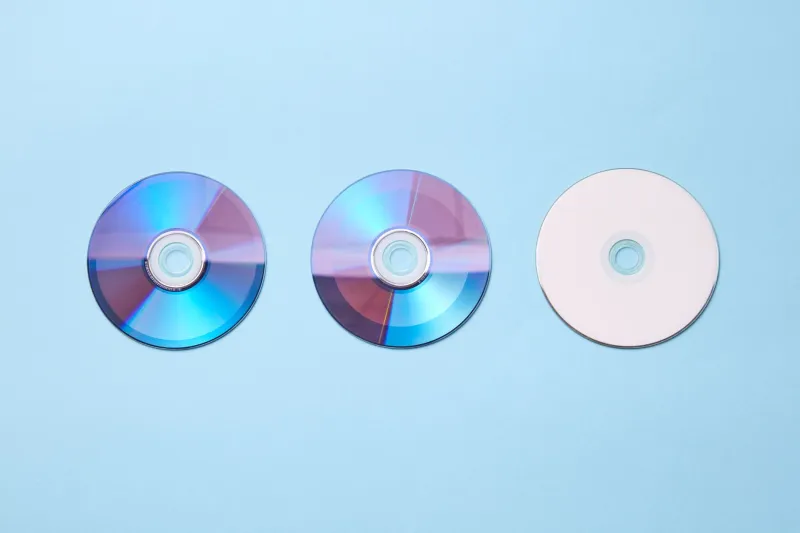
Discs Don't Disappear: Why the People Still Buying Physical Media Were Right All Along
Somewhere in suburban Ohio, Marcus keeps a wall of Blu-rays that his streaming-only friends used to mock. Three hundred titles, alphabetized, each one bought and paid for. Last spring, when a major platform quietly pulled two dozen films from its catalog overnight — no announcement, no warning, just gone — Marcus watched his group chat light up with frustrated texts. He didn't say anything. He just walked to his shelf and pulled out a copy of one of the deleted films. Pressed play. It worked.
That's the whole argument, really. But let's unpack it anyway.
The Myth of the Permanent Library
Streaming sold us a fantasy. The pitch was simple and genuinely seductive: every movie, every album, every TV show, all of it, right there, forever, for the price of a couple of lattes a month. People bought in hard. DVD collections got donated. CD towers got dismantled. Physical shelves gave way to minimalist living rooms and the quiet confidence that the cloud had it handled.
Except the cloud doesn't actually have it handled. The cloud has it licensed. That's a very different thing.
When a streaming service loses the rights to a title — because contracts expire, because studios pull back for their own platforms, because a company collapses or pivots — that title vanishes from your queue without ceremony. You didn't lose access to something you owned. You lost access to something you were borrowing, whether you understood that or not. The terms of service you didn't read made that distinction very clearly. The marketing absolutely did not.
This isn't a hypothetical risk. Streaming platforms have collectively removed thousands of titles over the past decade. HBO Max gutted its original content library in a single afternoon to claim tax write-offs. Disney+ has cycled titles in and out based on regional licensing patchworks most subscribers don't even know exist. Music platforms have lost entire catalogs when label deals fell apart. If you built your entertainment life inside someone else's subscription, you built it on sand.
Cold Logic, Not Nostalgia
Here's what's important to understand about the people still buying physical media: most of them aren't doing it because they're sentimental about jewel cases or because they think vinyl sounds warmer (though some of them think that too). They're doing it because they ran the numbers on ownership versus access and landed somewhere rational.
Jenna, a librarian in Portland, started rebuilding her DVD collection after a documentary she'd recommended to patrons disappeared from three different platforms in the same month. "I'm not anti-streaming," she says. "I still have subscriptions. But I stopped confusing 'available to stream' with 'mine to watch.' Those are not the same sentence."
She now keeps physical copies of anything she considers essential — films she returns to, albums she'd genuinely grieve losing. Everything else, she streams with the understanding that it might not be there next week. It's a tiered system: rent the disposable stuff, own the things that matter.
That's a more sophisticated media relationship than most people have. And it's one the industry absolutely does not want you to have, because the whole subscription model depends on you not noticing the difference between access and ownership until it's too late.
The Cartridge Crowd
Physical media maximalism extends well beyond film. The retro gaming community has been making the ownership argument for years, and recent events have given them serious ammunition. When Nintendo shut down its 3DS and Wii U digital storefronts in 2023, every game purchased digitally through those platforms became inaccessible to anyone who hadn't already downloaded it. Hundreds of titles — some of them exclusives with no other release — effectively ceased to exist for casual users.
The people who bought cartridges still have their cartridges.
There's a generation of younger collectors who came to physical media not through nostalgia but through watching digital libraries evaporate in real time. They saw what happened to Google Play Movies purchases when playback policies shifted. They watched Microsoft sunset games they'd paid full price for. They drew the obvious conclusion and started buying boxes.
What You Actually Lose
Beyond the obvious "it might disappear" problem, there are quieter losses baked into the streaming model that physical media sidesteps entirely.
Internet dependency is a big one. Your disc plays whether your ISP is having a rough day or not. It plays in a cabin without WiFi, on a long drive, during a storm that knocked out service for your whole block. The people who own their media don't negotiate with bandwidth caps or buffering wheels. They just watch.
Then there's the version problem. Streaming platforms have served altered cuts of films without disclosure — edits for content, for runtime, for regional censorship requirements. When you own a physical disc, you own a specific, documented version of a work. The director's cut you bought is the director's cut you'll always have. Nobody can patch it overnight.
And there's the simple economic reality that a disc bought once costs nothing to watch again. The subscription meter never stops running. Over a decade, the math on owning your fifty most-watched films versus paying monthly for the right to stream them is not close.
The Infrastructure Argument
The deeper issue — the one that ties physical media ownership to the broader No Grip ethos — is about infrastructure dependency. Every streaming service, every digital storefront, every cloud-based library is a single point of failure. Companies fold. Servers go offline. Licensing agreements collapse. Rights get tangled in acquisitions and mergers and bankruptcy proceedings. All of that is completely outside your control, and none of it affects a disc sitting on your shelf.
Owning physical media is a form of personal infrastructure. It's the entertainment equivalent of keeping a local backup instead of trusting everything to someone else's server. The people who do it aren't Luddites. They're people who understood, earlier than most, that convenience built on someone else's terms is not really convenience at all — it's dependency with a friendly interface.
The Shelf Is Still Standing
Marcus in Ohio has never once lost a film from his collection because a licensing deal expired. Jenna in Portland has never shown up to recommend a documentary only to find it's been memory-holed. The cartridge collectors have never booted up a game to find it requires a server that no longer exists.
The people who kept buying physical media absorbed years of jokes about being behind the times. They were told they were clinging to dead formats, wasting money on shelf space, refusing to evolve. Meanwhile, the evolved crowd is out here discovering that the movie they loved last year is no longer available anywhere, at any price, on any platform.
The disc still plays. It was always going to.