First Thing in the Morning, Your Phone Wins. These People Stopped Letting It.
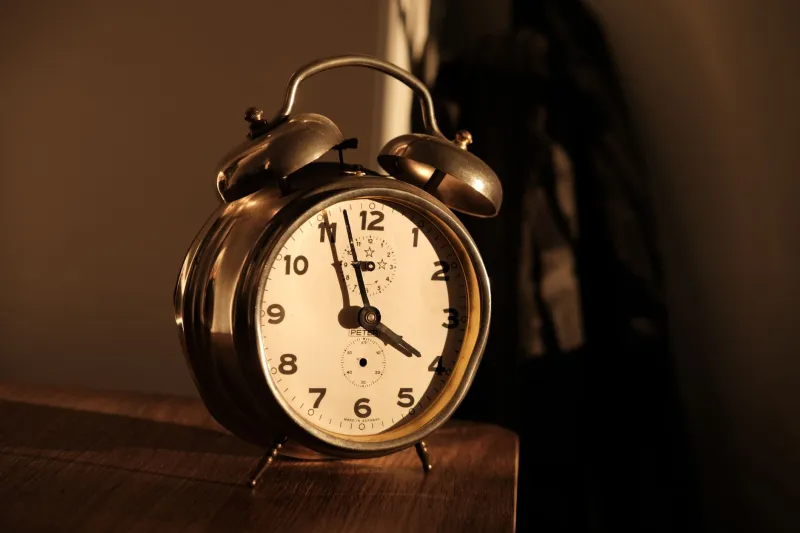
Before you've said a word to another human being, before you've had coffee, before your eyes have fully adjusted to the light — your phone already has you. The alarm goes off, you tap dismiss, and somewhere between silencing it and putting it back down, you've checked a notification. Maybe two. Maybe you've already opened Instagram. The day hasn't started and you're already behind.
This is not an accident.
The Bedroom Is a Product
Every major platform has a vested interest in being the first thing you see in the morning. That's not a conspiracy theory — it's a documented strategy. The more time you spend inside an app, the more data gets collected, the more ads get served, the more engagement metrics climb. Your grogginess is a feature, not a bug. You're less defended at 6:47 a.m. than you are at noon. The companies building these products know that.
Using your phone as an alarm clock is, functionally, an invitation to let a corporation set the tone for your entire morning. And for years, most of us accepted that deal without really thinking about it — because it was convenient, because the phone was already on the nightstand, because who even sells alarm clocks anymore?
Turns out: a lot of people. And they're selling out.
The Dumb Device Renaissance
Basic digital alarm clocks — the kind that display the time, make noise, and do absolutely nothing else — have seen a quiet resurgence in sales over the last few years. Retailers like Target and Amazon have reported steady demand for sub-$20 alarm clocks, and niche electronics sellers have watched certain analog models go on backorder. This isn't a nostalgia trip. It's a rejection.
Marcus, a software engineer in Austin, made the switch two years ago after reading about sleep hygiene and realizing that his phone was the last thing he looked at before bed and the first thing he reached for after waking. "I was basically bookending my unconscious hours with a feed," he says. "That felt genuinely insane once I noticed it."
He bought a $14 clock from a drugstore. Nothing fancy. No Bluetooth, no ambient light sensor, no companion app. It tells him the time and wakes him up with a sound he describes as "aggressively unflattering." He loves it.
"The first morning without the phone in the room, I just... laid there for a minute. Stared at the ceiling. It felt weird. By the third morning it felt like the most natural thing in the world."
What the Phone Actually Takes From You
The argument for keeping your phone out of the bedroom isn't just about sleep — though the research on blue light, notification anxiety, and sleep quality is pretty damning on its own. It's about cognitive sovereignty. About who gets to frame your first conscious moments.
Psychologists who study attention and habit formation talk about something called "morning intention" — the idea that the first few minutes after waking are unusually influential in setting your mental state for the day. When you spend those minutes reacting to other people's content, other people's emergencies, other people's opinions, you've essentially started the day in a defensive crouch. You're responding before you've even decided what you care about.
A dedicated alarm clock gives you nothing to respond to. It wakes you up and then shuts up. That silence is the point.
Diana, a teacher in Ohio who made the switch after a particularly brutal school year, describes the change as reclaiming a buffer. "I used to wake up and immediately feel behind. Someone had emailed at midnight. There was news. My brain was already racing." She bought a simple analog clock — actual hands, no display glare — and moved her phone to the kitchen. "Now I have about 20 minutes in the morning that are just mine. I didn't realize how much I needed that until I had it."
The Ripple Effect Nobody Talks About
Here's what the alarm clock discourse usually misses: removing your phone from the bedroom doesn't just change your morning. It changes your relationship with the phone for the rest of the day.
When the phone isn't the first and last thing you touch, it loses some of its psychological grip. It becomes a tool you pick up with purpose rather than a reflex you can't suppress. Multiple people who made this switch report that their overall screen time dropped — not because they were trying to reduce it, but because the habitual, ambient quality of phone use weakened once it was no longer physically embedded in their sleep cycle.
Marcus noticed it within a few weeks. "I stopped picking it up just to pick it up. I'd go to check something specific, check it, and put it down. That sounds like it should be obvious, but it really wasn't how I operated before."
There's a compounding effect to these small hardware choices that doesn't get enough credit. The phone on your nightstand is an anchor for a whole constellation of behaviors. Move the anchor, and a lot of other things shift with it.
The $12 Radical Act
None of this requires a lifestyle overhaul. You don't need a wellness routine or a productivity framework or a 30-day challenge. You need a clock that costs less than two cups of coffee and a decision to put your phone somewhere else before you go to sleep.
That's it. That's the whole move.
The alarm clock industry isn't exactly disrupting anything. These devices are boring by design. They do one thing. They don't know your name, they don't have a premium tier, they don't send you a weekly digest of your sleep patterns. They just beep. And right now, that beep is starting to sound a lot like freedom.
The most sophisticated thing you can do with your bedroom technology might be to make it dramatically less sophisticated. To own a device that has no interest in you whatsoever — that wakes you up and then asks nothing more of you. In a landscape where every product is quietly angling for more of your attention, a clock that couldn't care less is almost punk.
Your phone will be there when you're ready for it. On your terms. After coffee. After you've had a minute to just exist.
It can wait.