Paper Doesn't Crash: The Professionals Who Quit Their Project Management Apps and Never Looked Back
There's a moment a lot of people recognize when they hear it described. You open your project management app to check one task. Forty-five minutes later you've reorganized three boards, responded to six comment threads, updated a Gantt chart nobody reads, and you still haven't done the thing you opened the app to do.
For a growing number of American professionals, that moment was the last one. They closed the tab, canceled the subscription, and picked up a pen.
This isn't a nostalgia trip. It's a reckoning.
The Overhead Nobody Talks About
Project management software is sold on the promise of clarity. One source of truth. Total visibility. Seamless collaboration. And maybe, for a 200-person engineering org, some of that holds up. But for a freelance copywriter in Austin, a general contractor in Cleveland, or a three-person design studio in Portland? The math doesn't work.
Every tool in this category carries what engineers call overhead — the cost of operating the system itself, separate from the work the system is supposed to help you do. In software, that overhead is invisible until it isn't. Onboarding. Template setup. Notification management. Integrations that break when one platform updates. Weekly check-ins that exist solely to update the app that was supposed to eliminate the need for weekly check-ins.
Marcus, a residential contractor outside Nashville, ran his small crew on Monday.com for about fourteen months. "I spent more time logging tasks than doing them," he says. "My guys would be out on a job and I'd be inside updating statuses. That's backwards."
He switched to a whiteboard and a spiral notebook. That was two years ago. He hasn't looked back.
What Paper Actually Does
The analog converts tend to describe the same set of benefits, and they're not romantic about it. This isn't about the smell of paper or the feel of a fountain pen. It's about friction — or more precisely, the absence of the wrong kind.
Sarah runs a boutique PR firm in Chicago with four employees. She tried Notion, Basecamp, and Asana over a span of three years, customizing each one, training her team, and watching adoption quietly collapse every time. "People would use it for two weeks and then just start texting me," she says. "Because texting was faster."
Now the office runs on a shared whiteboard, individual notebooks, and a weekly printed one-pager she makes in Google Docs. Nothing fancy. "My team actually knows what everyone is working on because we talk about it. The app was supposed to replace that conversation. It just buried it."
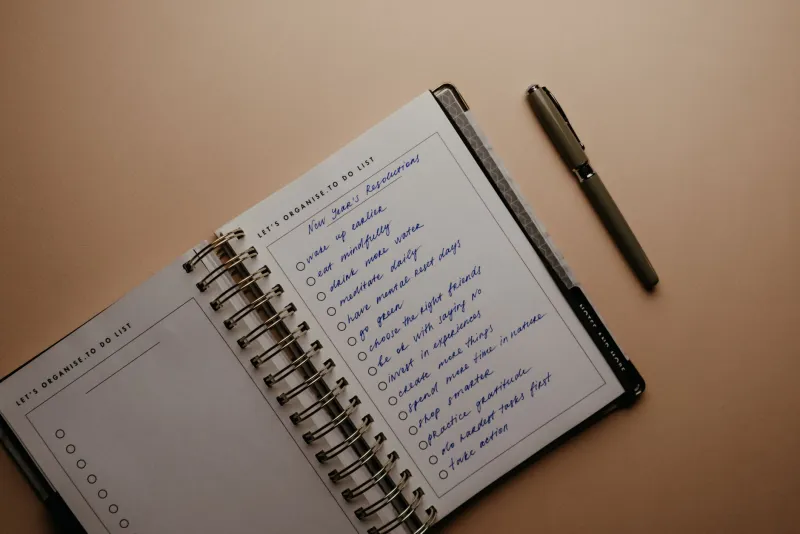
The thing paper does well is force prioritization. A notebook page is finite. You can't infinitely nest subtasks or attach seventeen files to a handwritten to-do. The constraint isn't a bug — it's the feature. When you have to fit your week onto a single page, you make decisions about what actually matters. Software, by contrast, will happily hold ten thousand tasks in perfect organizational order, none of them ever done.
The Notion Problem Specifically
Notion deserves its own paragraph because it represents a particular flavor of this trap. It's genuinely impressive software. It's also a world-class procrastination machine dressed up as a productivity system.
The promise of Notion is that you can build exactly the workflow you need. The reality is that building the workflow becomes the work. People spend weekends constructing elaborate personal operating systems with linked databases, custom properties, and toggle blocks nested four levels deep — and then use it to track their grocery list.
Dev, a freelance web developer in Seattle, spent three months building what he called his "second brain" in Notion. "It was beautiful," he says, with the tone of someone describing a failed relationship. "I had everything connected. Projects linked to clients linked to invoices linked to notes. I was so proud of it." He pauses. "I shipped less work that quarter than any other quarter in five years."
He now uses a plain text file and a paper notebook. His system has two rules: write down what you're doing today, cross it off when it's done. Quarterly revenue went up.
This Isn't Anti-Tech. It's Anti-Bloat.
The people making this switch are not Luddites. Marcus still uses software to send invoices and file permits. Sarah's firm lives in Slack and Google Workspace. Dev builds on the web for a living. None of them are rejecting technology wholesale.
What they're rejecting is the assumption that more tooling equals more productivity — a myth that conveniently benefits the companies selling the tools. Asana's business model requires you to believe you need Asana. Monday.com's Series D depends on you feeling like your workflow is broken without it. The entire project management software industry is predicated on a problem it also defines.
The analog converts have simply stopped accepting that framing. They did the experiment. They ran the software. They measured the output. And a lot of them found that the output went up when the software went away.
The Quiet Verdict
None of this is to say project management software is useless for everyone. Distributed teams across time zones genuinely need async coordination tools. Large organizations with complex dependencies need visibility infrastructure. The software exists for real reasons.
But somewhere between "real reasons" and "mandatory for all work," the industry lost the plot. And now a contractor in Nashville and a PR director in Chicago and a developer in Seattle are all independently arriving at the same conclusion: the tool should serve the work, not the other way around.
Paper doesn't have a free tier. It doesn't send you a re-engagement email when you haven't logged in. It doesn't deprecate its API or get acquired and sunset. It doesn't ask you to upgrade to access last month's data.
It just holds what you write until you cross it out.
That's the whole pitch. Turns out, for a lot of people, that's enough.