Planting a Flag in the Digital Dirt: Why Some Americans Are Buying Domain Names They'll Never Build On
Planting a Flag in the Digital Dirt: Why Some Americans Are Buying Domain Names They'll Never Build On
For about twelve bucks a year, you can own a corner of the internet. No neighbors. No HOA. No algorithm deciding whether your little plot is worth showing to people. Just a name, a registrar, and the quiet satisfaction of knowing that particular string of characters belongs to you.
A growing number of Americans are doing exactly that — and building absolutely nothing on top of it.
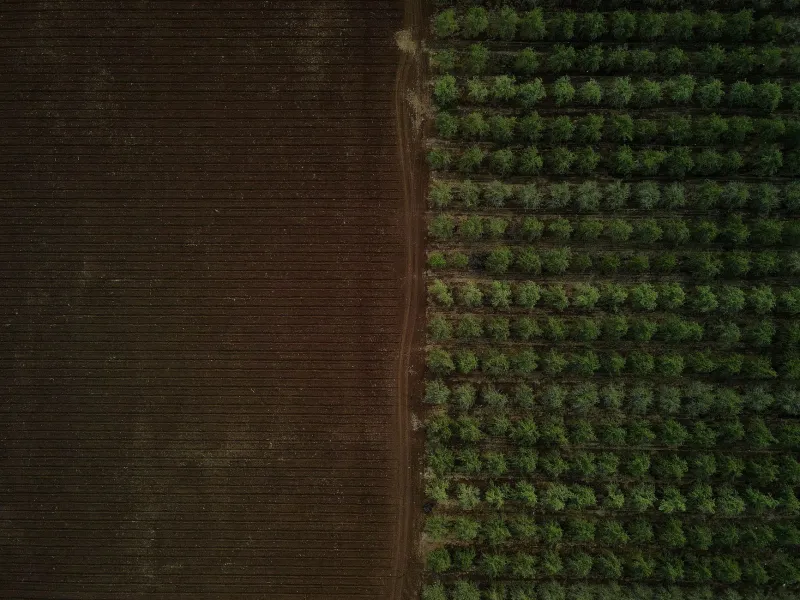
They're not domain squatters in the old, grimy sense. They're not camping on nikerunningshoes2025.com waiting for a trademark lawsuit payday. They're regular people — writers, developers, designers, teachers, hobbyists — who are registering domains the way their grandparents might have bought a parcel of land out past the city limits. Not because they needed it today. Because they wanted to have it.
The Deed Nobody Talks About
There's a philosophical shift buried in this behavior that's easy to miss if you're only looking at the spreadsheet. When someone registers a domain, they're not just reserving a URL. They're opting out of a system that has spent the last fifteen years convincing everyone that owning your own corner of the web is unnecessary, even quaint.
Why build a personal site when you have a LinkedIn profile? Why register a domain when you can drop a link in your Instagram bio? The platforms made it frictionless to exist inside their walls — and in doing so, they quietly made it feel weird to want anything outside them.
Some people noticed that trade-off and decided they didn't like it.
"I have maybe twenty domains I'm sitting on," says Marcus, a freelance developer in Portland who asked to use only his first name. "Some of them are ideas I haven't had time to build. Some of them are just names I thought were too good to let go. But honestly, a few of them I bought just because I wanted to know they existed and nobody else could have them."
That last part — nobody else can have them — is the crux of it.
Scarcity in a Place Nobody Told You Was Scarce
The internet feels infinite. It is not. The namespace is finite, and the good real estate — short, memorable, meaningful .com addresses — has been claimed, contested, and commodified for decades. What's left is a mix of the obscure, the hyphenated, and the newer TLDs like .io, .co, and .xyz that carry varying degrees of cultural weight depending on who you're talking to.
But here's what most people don't think about: the domain you want for the thing you might build someday is almost certainly available right now. And the window doesn't stay open.
That's the anxiety underneath the casual act of registration. It's not paranoia exactly — it's pattern recognition. People who've watched platforms sunset, usernames get taken, and once-open corners of the web get fenced off have developed a kind of preemptive instinct. Claim the thing before the thing becomes impossible to claim.
"I registered my full name as a .com the day I graduated college," says Dani, a UX researcher in Chicago. "I didn't have a portfolio. I didn't have a plan. I just knew that one day I would, and I didn't want to find out someone else already had it."
She's been renewing it every year for nine years. The site has been a placeholder page for most of that time. She considers it one of the better investments she's made.
Resistance Disguised as a Registration Form
There's something quietly political about this, even if the people doing it wouldn't necessarily frame it that way.
Every domain you own is a hedge against platform dependency. It's a fallback that exists outside the reach of a terms-of-service update, an acquisition, or a board decision to pivot the product. It's a thing you control — not rent, not borrow, not earn through engagement metrics. Own.
In an era where the default mode of digital existence is tenant farming — posting your work to someone else's platform, building an audience on someone else's infrastructure, letting someone else decide how your content gets distributed — holding a domain deed is a small but meaningful act of refusal.
You don't have to build anything on it. The act of holding it is enough.
"Platforms come and go," says Trevor, a music blogger in Nashville who currently maintains a network of about thirty domains in various states of development. "MySpace went. Tumblr went weird. Twitter went — whatever you want to call what happened there. Every time one of those things implodes, there's a scramble. People realize they built everything on sand. I'd rather have a foundation sitting empty than no foundation at all."
The Cost of Doing Nothing
The math is not complicated. A .com registration runs somewhere between $10 and $15 a year at most registrars, less if you catch a promo. For the price of a couple of streaming service months, you can lock down a domain for a decade.
Critics of this behavior — and there are some, mostly in the "just ship it" crowd — argue that sitting on domains is a form of procrastination dressed up as strategy. That the domain becomes a psychological substitute for actually building the thing. That the registration is the dopamine hit, and the project never comes.
That's a fair point, and probably true for some percentage of the domains out there pointing at parked pages. But it misses something important: not every domain needs to have a project behind it. Some of them are just claims. Stakes in the ground. Proof that you were here before the neighborhood changed.
The internet has spent a long time telling you that you don't need to own anything — that access is enough, that the feed is enough, that renting space inside someone else's system is the modern, sensible way to exist online. A growing number of people are quietly, cheaply, annually disagreeing.
What You're Actually Buying
A domain name is not a website. It's not a business. It's not even a promise. It's closer to an option — the right to build something, someday, on your own terms, in a place that nobody can take from you as long as you keep paying the renewal fee.
For some people, that option never gets exercised. The domain expires, someone else picks it up, and life goes on. But for others, that little annual renewal is the thread connecting who they are now to who they're planning to become. A placeholder for a future self who finally has the time, the idea, or the nerve to put something real on the internet.
In a web that increasingly belongs to a handful of massive platforms, there's something worth honoring in the stubborn impulse to hold your own piece of it — even if that piece is currently pointing nowhere.
Twelve bucks a year. No algorithm required.