Cut the Cord on Your Cord Cutter: Why Some Americans Are Going Back to the Landline
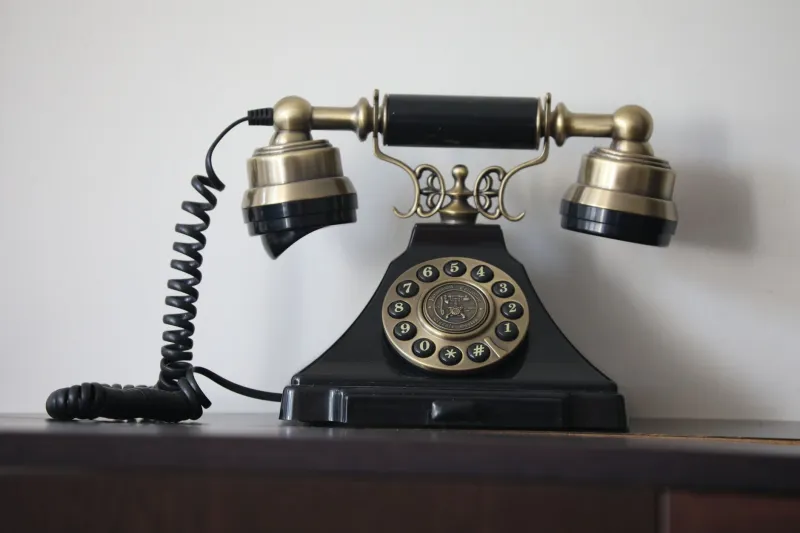
Somewhere in Portland, Oregon, a 34-year-old software engineer named Marcus keeps a corded phone plugged into the wall next to his kitchen table. It's not ironic. It's not a prop. It rings, he answers it, and when the call is over, he puts the handset down and walks away. The phone doesn't follow him.
That last part is the whole point.
"My smartphone knows where I eat lunch," Marcus told us over — you guessed it — his landline. "It knows when I wake up, how long I slept, what I searched for at 2am. The landline knows nothing about me. It just makes calls."
This is not a nostalgia piece. Nobody here is pining for the days of busy signals and tangled cords. What's happening instead is something more deliberate and, honestly, more interesting: a scattered but growing community of Americans who have either kept or returned to landline phones as a conscious act of refusal. Refusal to be tracked. Refusal to be always-on. Refusal to let a corporation monetize the geography of their daily life.
The Device in Your Pocket Is Not Neutral
Let's be honest about what a smartphone actually is in 2025. It's a sensor array that also makes calls. It logs your location continuously. It listens for wake words. It reports back to servers owned by companies whose entire business model depends on knowing as much about you as possible. The calls and the texts are almost a footnote.
Landlines don't do any of that. A traditional landline — especially a corded one — has no GPS chip, no microphone that's live when you're not using it, no app ecosystem harvesting your behavior. It connects two people. That's the product. That's the whole product.
For people who've spent time really thinking about what they've handed over to their devices, that simplicity stops looking quaint and starts looking like a feature.
Who's Actually Doing This
The demographics here are more interesting than you'd expect. Yes, there are older Americans who never gave up their landlines in the first place — around 30% of U.S. households still have one according to CDC data, though the number keeps falling. But the more surprising story is the people who left and came back.
Diana, 41, a nurse in rural Tennessee, switched back after a string of incidents that creeped her out — targeted ads appearing after conversations she'd had out loud near her phone, location data she hadn't knowingly shared showing up in apps she barely used. "I started feeling like I was being watched inside my own house," she said. "The landline fixed that for home calls. I still have a cell for work and emergencies, but my home conversations are mine again."
Then there's a contingent that's doing it for psychological reasons that have nothing to do with surveillance. Jerome, 29, a grad student in Chicago, got rid of his home cell service entirely and uses a VoIP landline number as his primary contact. "The landline doesn't come to bed with me. It doesn't interrupt dinner. It doesn't buzz in my pocket when I'm trying to think. Having a phone that stays in one place is — it sounds weird, but it's freeing."
The Practical Argument Nobody's Making
Here's something the phone carriers definitely don't advertise: landlines are more reliable in emergencies. During power outages, cellular towers go down or get overloaded. Traditional copper landlines — where they still exist — can run on the telephone network's own power. When a hurricane hit parts of the Gulf Coast a few years back, the people who could still make calls were often the ones with landlines.
There's also a 911 argument. When you call from a landline, dispatchers get your address automatically. Cell 911 calls require triangulation, which takes longer and is less precise, especially in rural areas or dense urban environments where signal bounces off buildings. For families with kids or elderly relatives at home, that precision matters.
None of this is secret information. It just doesn't make headlines because there's no money in selling you a landline. The margins are thin, the upgrade cycle is essentially zero, and you can't monetize the user. So nobody's incentivized to remind you it exists.
The Grip You Don't Notice Until You Loosen It
This is where it gets philosophical, and No Grip readers know we're not shy about going there.
The smartphone has become so normalized that questioning it feels eccentric. But step back for a second. You carry a device that your employer can reach you on at any hour. Your family expects instant responses. Silence reads as rudeness. Being unreachable — even briefly — requires explanation.
When did we agree to that? When did "available by phone" come to mean "available at all times, in all places, to all people"?
The landline enforces a boundary that the smartphone demolished. It says: I can be reached here, during reasonable hours, when I'm home. That's it. Everything else is negotiable.
Marcus again: "People think I'm being antisocial. But I'm more present in every conversation I have because I'm not half-monitoring my phone while we talk. The landline made me better at being with people, not worse."
This Isn't About Going Backward
Nobody's arguing you should throw your smartphone into a river. Most of the people doing the landline thing still have a cell — they're using it as a tool rather than letting it function as a leash. The landline becomes the home base, the reliable anchor, the place where calls that matter actually happen.
Some are using VoIP services like Google Voice or Ooma to get a landline-style number without the traditional phone company. Others are going full analog with copper lines or even cordless DECT phones that still keep the radio signal contained to their house. The specifics vary. The philosophy is consistent: the phone should serve you, not the other way around.
What these people have figured out is that opting out — even partially — changes your relationship with the technology you kept. When your cell isn't your only lifeline, it has less power over you. You pick it up when you want to. You put it down without anxiety. The notifications lose some of their urgency when there's another way to reach you if something actually matters.
The Quiet Radical Move
In a culture that treats the latest iPhone as a status symbol and "I'll send you a calendar invite" as a form of intimacy, keeping a landline is a mild but genuine act of defiance. It says you've thought about what you want from communication technology rather than just absorbing whatever the industry decided to hand you.
That's not nostalgia. That's discernment.
The last people holding onto landlines aren't behind the times. Some of them are just further ahead than the rest of us in figuring out where the real cost of constant connectivity actually lands — and deciding it's not worth paying.
The phone on Marcus's kitchen wall doesn't know where he is. It doesn't know what he bought last Tuesday or what he searched for at midnight. It just rings when someone wants to talk.
Maybe that's enough. Maybe that was always enough.