We Read Five Terms of Service Agreements So You Could See Exactly What You Signed Away
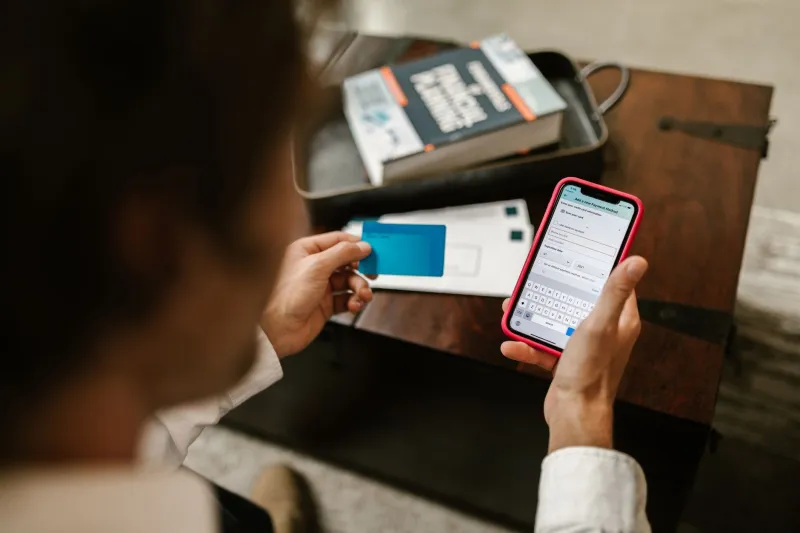
The average Terms of Service agreement is about 7,000 words long. The average American reads at roughly 250 words per minute. That means actually reading the ToS before clicking agree would take you about 28 minutes — per app. Nobody does this. The companies writing these documents know nobody does this. The documents are designed with that assumption baked in.
We did the reading anyway. Five platforms. Five agreements. No law degree, no outrage performance, just plain English and a highlighter.
What follows isn't a scare piece. It's more uncomfortable than that — it's a ledger. A calm accounting of what you've already handed over.
Platform One: The Social Media Giant
Let's start with the one you already know is bad.
Facebook's Terms of Service, combined with its Privacy Policy and Platform Policy, runs to tens of thousands of words across multiple documents. But the clause that deserves your attention sits near the top, in the license section:
You grant Facebook "a non-exclusive, transferable, sub-licensable, royalty-free, worldwide license" to use anything you post.
That's the actual language. "Sub-licensable" means they can license your content to third parties. "Royalty-free" means without paying you. "Worldwide" means without geographic restriction. That photo of your kid's birthday party? Legally, it can travel.
The license technically ends when you delete the content — but content others have shared from your posts may retain that license even after deletion. There's a carve-out for that. Most people never see it.
Platform Two: The Everything Store
Amazon's Alexa Terms of Service contain a passage that's easy to skim past: your voice recordings may be used to "improve Amazon's products and services" and may be reviewed by Amazon employees.
This is not theoretical. Amazon has confirmed that human reviewers do listen to Alexa recordings. The default setting, for years, was opt-in without most users realizing it. The setting to disable this exists, but it's buried — not featured, not explained during setup, not surfaced unless you go looking.
More quietly, the Terms also note that Alexa interactions may be used to serve you targeted advertising across Amazon's advertising network. The device in your kitchen that you asked about tomorrow's weather is also, contractually, a behavioral data point.
Platform Three: The App You Use to Split Dinner
Venmo's User Agreement includes a data-sharing clause that extends to its parent company, PayPal, and PayPal's "affiliates, subsidiaries, and business partners." That network is large and not fully enumerated in the document itself.
But the clause that catches the eye is around transaction data. By default, Venmo transactions are public. Not just the fact that you paid someone — the memo field too. That note you wrote as a joke. The one that says what the money was for. Public, by default, to anyone who visits your profile.
Venmo has faced regulatory scrutiny over this. The default has been criticized by privacy advocates for years. It remains the default.
The arbitration clause is also worth noting: by using Venmo, you waive your right to participate in class-action lawsuits. Disputes go to individual arbitration, a process that statistically favors companies over individual users. This clause appears in nearly every major platform's ToS, and most users have agreed to it across a dozen services without ever registering what it means.
Platform Four: The Productivity Suite
Google Workspace — the suite that includes Gmail, Docs, Drive, and Calendar — processes your data to serve advertising across Google's network, unless you're on a paid enterprise plan. The free tier scans email content. The ToS is clear about this, buried in the Privacy Policy that the Terms reference but don't reproduce.
"Google uses automated systems to analyze your content," the policy reads. The word "automated" is doing a lot of work there. It's technically accurate, and it's also carefully chosen to sound less invasive than it is.
What's most striking about Google's documentation isn't any single clause — it's the sheer scope of what "content" encompasses. Emails. Documents. Calendar events. Search queries. Location history, if location services are enabled. The ToS doesn't hide this. It just counts on you not reading far enough to reach it.
Platform Five: The Short-Form Video App
TikTok's Terms of Service and Privacy Policy have received congressional attention, but the actual language is worth sitting with regardless of where you land on the geopolitical debate.
The app collects "faceprints and voiceprints" — that language appears in the Privacy Policy. In states without specific biometric privacy laws (most states), this collection is legal with disclosure. The disclosure is in a document most users never read.
TikTok's Terms also grant the company license to use your content for promotional purposes without additional compensation. Your video, your face, your voice — usable in TikTok marketing materials. The license terms are broad and the carve-outs are narrow.
The app also tracks behavior off-platform when its pixel is embedded on third-party websites. If you've visited a site running TikTok's tracking code — which is common among e-commerce and media sites — TikTok has data on you even if you've never created an account.
What All Five Have in Common
A few patterns show up across every document we read.
Arbitration waivers appear in all five. You've almost certainly agreed to resolve disputes outside of court, individually, without the ability to join other users in a class action. This isn't illegal. It's just quietly effective at limiting corporate liability.
Broad data-sharing language with "affiliates" and "partners" appears in all five. The partners are never fully named. The data shared is described in general terms. The scope is, practically speaking, unknowable from the document itself.
License grants to your content appear in all five, with varying scope. In every case, the license is broader than most users would consent to if asked directly.
Unilateral amendment clauses appear in all five. The company can change the Terms. Continued use of the service constitutes acceptance of the new Terms. You will be notified, usually by email, sometimes only by a banner you'll dismiss without reading.
The Cold Arithmetic of Free
None of this is secret. That's the part that's hard to sit with. Every one of these clauses is technically disclosed. The companies aren't lying — they're counting on the fact that disclosure inside a 7,000-word document reads, functionally, as no disclosure at all.
The free tier of most major platforms isn't a gift. It's an exchange. Your attention, your content, your behavioral data, and your legal rights in disputes — those are the currency. The product you're getting in return is the app.
Whether that's a fair trade is a decision you should probably make consciously.
You've already made it. Most of us made it dozens of times. The question now is whether we keep making it the same way.